
Begin a Huntington Park People Search
The most useful first source is the one that accepts the fact already known. A street address points to the Los Angeles County Assessor. A full name may fit the court party index, a city staff search, a professional license lookup, or a business filing. An older address calls for directories, newspapers, and then the recorder's deed chain. Phone numbers are less common in current government indexes, so a known number works best as a way to confirm an official entry rather than as the sole starting point.
Huntington Park maintains municipal files, but Los Angeles County keeps the main deed, parcel, court, vital, and election systems. California adds license, business, unclaimed-property, archival, and privacy services. Use the shortest official path first, then move outward only when the result supplies a new name, date, address, parcel number, or case number.
- Write down the exact name, known spelling variants, address, and likely date range.
- Use the assessor when an address is known, or a name-based court, license, business, or staff search when it is not.
- Save official identifiers such as an AIN, case number, license number, or recording year.
- Move to the custodian's copy channel when the index does not show the record itself.
- For family history, pair probate and death sources with directories and local newspapers.
That Huntington Park sequence keeps similar names from being merged. It also separates a search result from a certified record.
Huntington Park People Records Custodians
City Hall is only one stop. The Los Angeles County Registrar-Recorder/County Clerk, usually shortened to RR/CC, maintains recorded real estate documents, county vital records, marriage records, elections material, and County Clerk filings. The Assessor links an address to a parcel and assessed values. Huntington Park's City Clerk handles council, planning, administrative, and other city records. Detailed access rules and request steps belong with the Huntington Park public records system.
Los Angeles County RR/CC
12400 Imperial Highway
Norwalk, CA 90650
In-person by appointment
Recorder services
Los Angeles County Assessor
County parcel records
AIN and address lookup
Online and office access
Assessor Portal
Huntington Park City Clerk
6550 Miles Avenue
Huntington Park, CA 90255
(323) 584-6230
City Clerk records
Each Huntington Park custodian answers a different question. Asking the city for a county deed or the recorder for a city permit adds delay without broadening access.
Huntington Park Deed Search Reality
Public does not mean posted online. Los Angeles County real estate records date to 1851, yet RR/CC provides no official internet access to the deeds or their indexes. The office keeps alphabetical indexes by party name and recording year. Records from 1851 through 1957 are reviewed on the lower level at Norwalk Headquarters, while records from 1958 forward are reviewed on the second floor.
This is both the main Huntington Park search trap and the key workaround. RR/CC will not perform an index search by telephone. Make an in-person appointment with likely Huntington Park names and years, locate the document number or book and page, then request the needed copy. A written or online copy order works much better after those identifiers are known. Current orders may also route through the county's designated copy vendor, with processing measured from receipt.
The RR/CC viewing instructions show the offline index rule.
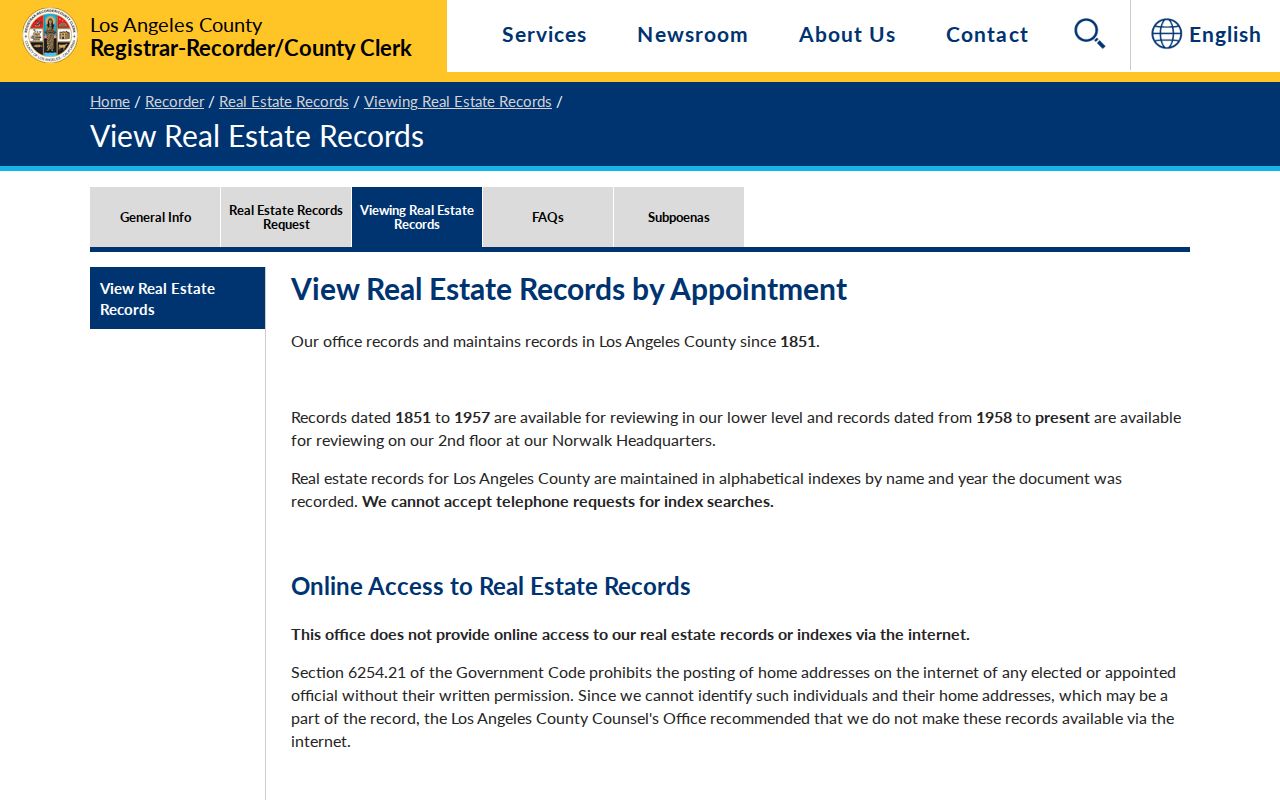
The capture confirms that the official property trail changes from web research to an office appointment.
Search Huntington Park Property Addresses
A Huntington Park address-first search avoids the recorder dead end. The Assessor Portal accepts an Assessor's Identification Number, called an AIN, or a street address. A parcel result can show the situs address, which means the physical property address, along with assessed value fields, parcel class, tax rate area, and parcel status. It is not a deed-image system, and official source material did not confirm a public owner-name search.
| Search control | Input | Use in a people search |
|---|---|---|
| AIN or Address | Parcel number or street address | Open the parcel record |
| Map Search | Map or geocoder location | Identify a parcel when the address is uncertain |
| Layers | Parcels and field books | Check boundaries and map context |
The Treasurer and Tax Collector then accepts the AIN for payment history covering the past three fiscal tax years. Use that short tax window for current parcel context, then take names and recording dates to the RR/CC deed index for ownership history.
The Assessor search displays the AIN and address entry point.
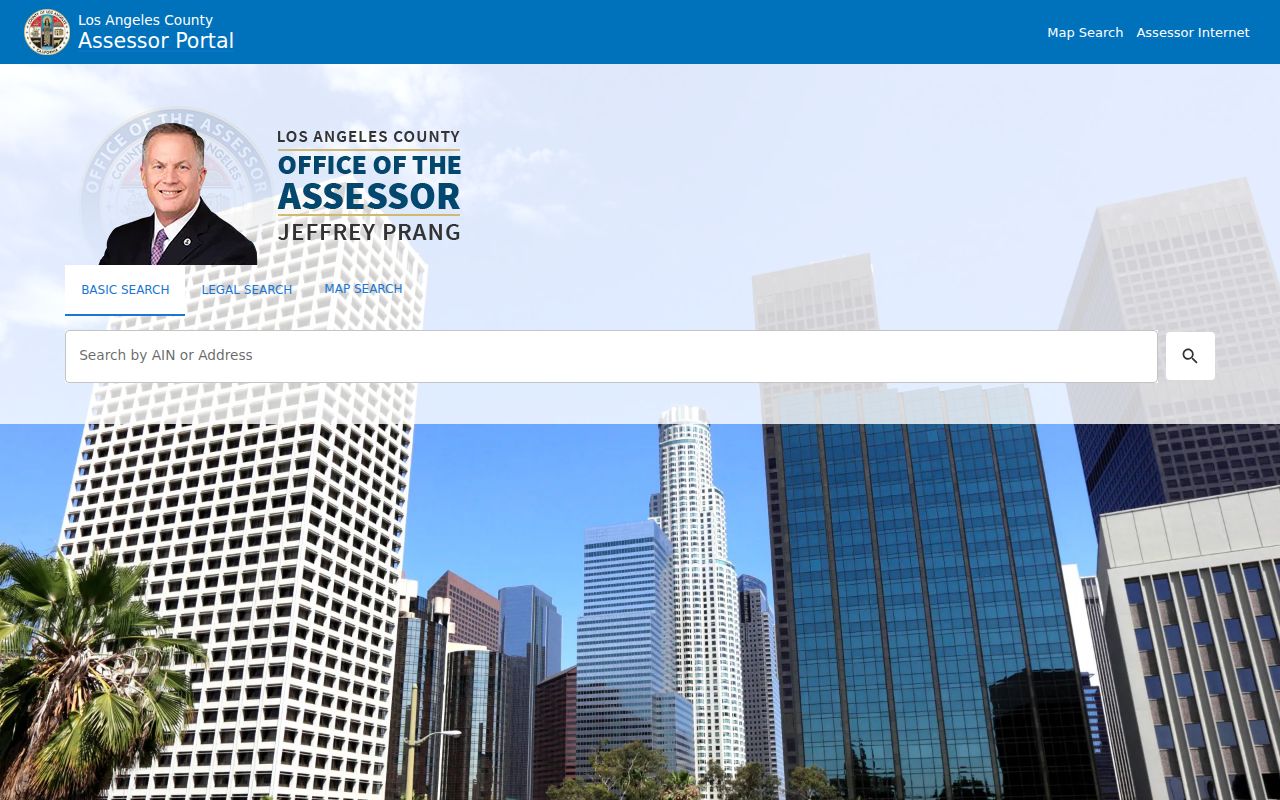
The screen illustrates why a known address is often the cleanest route into Huntington Park property records.
Note: A parcel result identifies the property; it does not replace the recorded deed or prove a complete ownership history.
Huntington Park Court Name Search
Huntington Park cases belong to Los Angeles Superior Court, not a separate municipal court archive. The Search for Case Number by Name covers civil, small claims, family law, and probate parties. Results may include the litigant name, case type, filing date, filing location, and the number of available document images. The index is updated daily and charges for a search even when it returns no match.
| Case group | Name-index span | Fallback |
|---|---|---|
| Unlimited civil, family, probate | 1983 to present | Court archives for older files |
| Limited civil | 1991 to present | Courthouse records office |
| Small claims | 1992 to present | Courthouse records office |
| Criminal felony | 1980 to present | Appropriate courthouse |
| Criminal misdemeanor | 1988 to present, with some older data | Appropriate courthouse |
Sealed and confidential Huntington Park files, paternity cases, and matters involving minors do not appear as ordinary public web results. Courthouse public-access computers may show more than the web service for some case types. Probate also has a separate case-number portal, so a researcher who lacks the number may need the paid name index first.
- Docket
- The dated list of filings and events in a case.
- Case number
- The court's unique identifier for a matter.
- Index
- A finding tool that points to a record but may not contain the document.
- Certified copy
- A copy authenticated by the custodian for formal use.
Note: Web index dates and document-image dates differ, so a listed case may still require a clerk or archive request.
Huntington Park Vital Records Search
Birth, death, and marriage events in Los Angeles County generally route to RR/CC. California Department of Public Health Vital Records handles statewide orders. Divorce decrees and case files are different: Los Angeles Superior Court holds them, while the state may issue a dissolution certificate. County birth records were documented from 1866 and county marriage records from 1852. Statewide birth coverage begins in July 1905.
An authorized certified copy for a Huntington Park event requires a qualifying relationship under California Health and Safety Code section 103526. A mailed request for an authorized copy needs a notarized identity statement. Informational copies are available to many requesters who do not qualify for an authorized copy, but they are marked as not valid to establish identity. Historic indexes and library sources can supply dates before a certificate order.
The California vital-records office explains the statewide order paths. County and state fees differ, so choose the custodian before completing an application.
Note: A full birth certificate is not an open resident index, even when a historical index helps locate the event.
Search Huntington Park City Archives
Municipal names often surface in records that are not designed as people directories. Huntington Park's Archive Center includes City Council, Planning Commission, Historic Preservation Commission, Youth Commission, Traffic Authority, resolutions, newsletters, and warrant or demand registers. Search by keyword, choose a category, and then narrow the time period or start and end dates. Planning applicants, commissioners, speakers, contractors, and property matters may appear in packets or minutes.
The City Clerk's public-records form is the fallback when an item is not posted. It supports inspection or copies and asks for a clear record description and date range. Submission channels include email, fax, mail, and in-person delivery. The form says the office will determine whether responsive records exist and respond within ten days. Huntington Park Police records use their own unit and release rules.
The Archive Center's category list helps target a city name search to the board or record series most likely to hold it. The city request instructions show the local fallback.
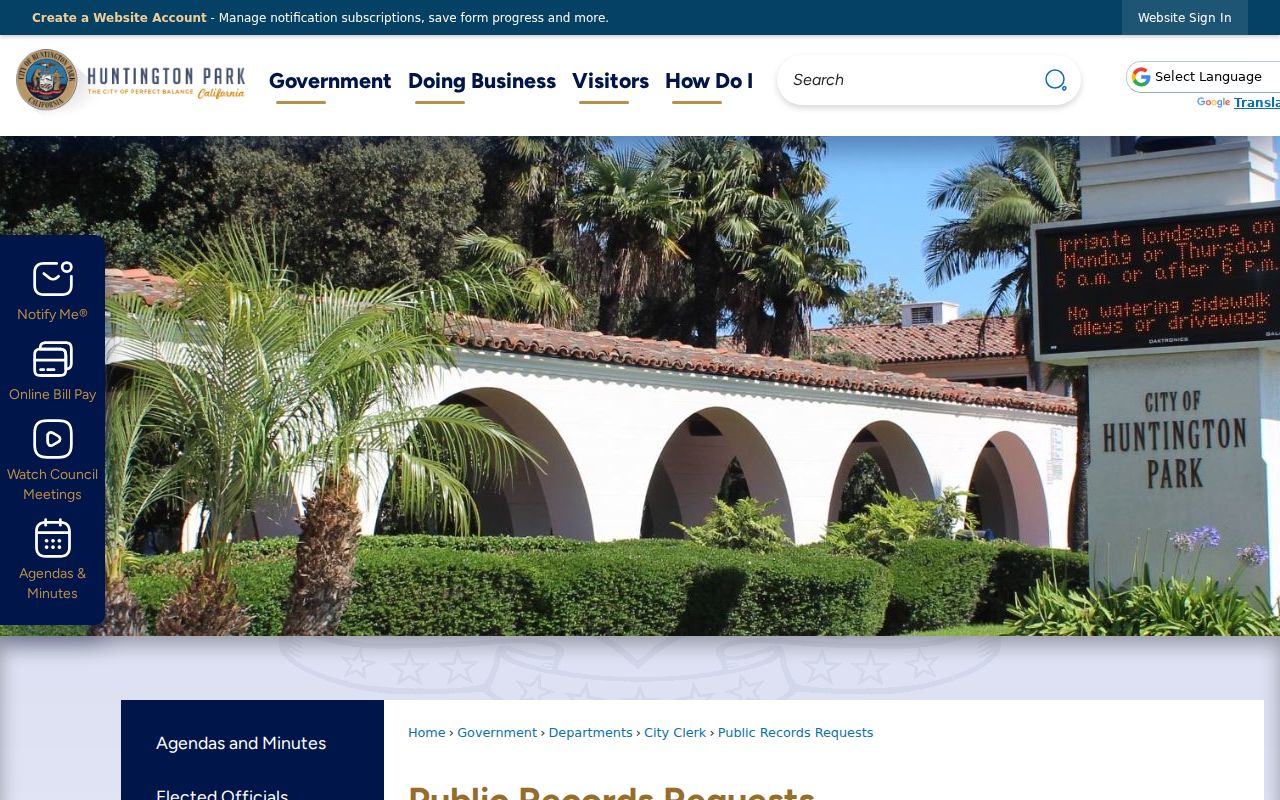
The city route applies to Huntington Park files, while county and state custodians keep their own request channels.
Note: Use the ordinary copy process when an agency already provides one; a Public Records Act request is not always the right route.
Huntington Park License Name Searches
Business and license records are strong Huntington Park name trails when a person is tied to a firm or regulated trade. California's Department of Consumer Affairs advanced search accepts first name, last name, license number, business name, registry number, board or bureau, and license type. Separate official systems cover attorneys, contractors, real estate licensees, and educator credentials. Results may show status, dates, public contact details, or discipline indicators, depending on the board.
The DCA advanced license search displays its name and license fields.
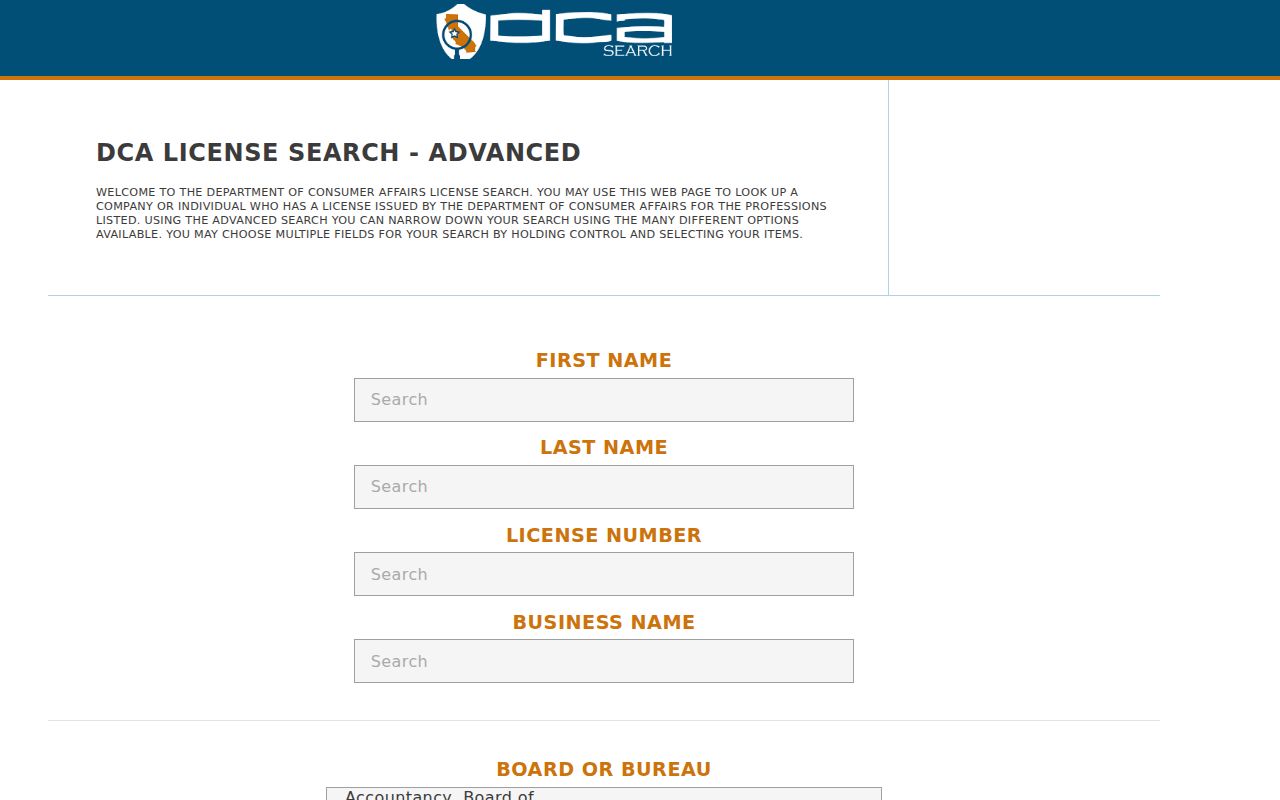
The board and license-type filters can separate people who share a common name.
California Secretary of State business filings offer another route. Search an entity, then compare filing details, status, agents, addresses, or officers only where the actual record displays them. County fictitious business name records cover a different layer, including online paths from April 2011 and open data from February 2024.
The bizfile business search is the statewide entity source.
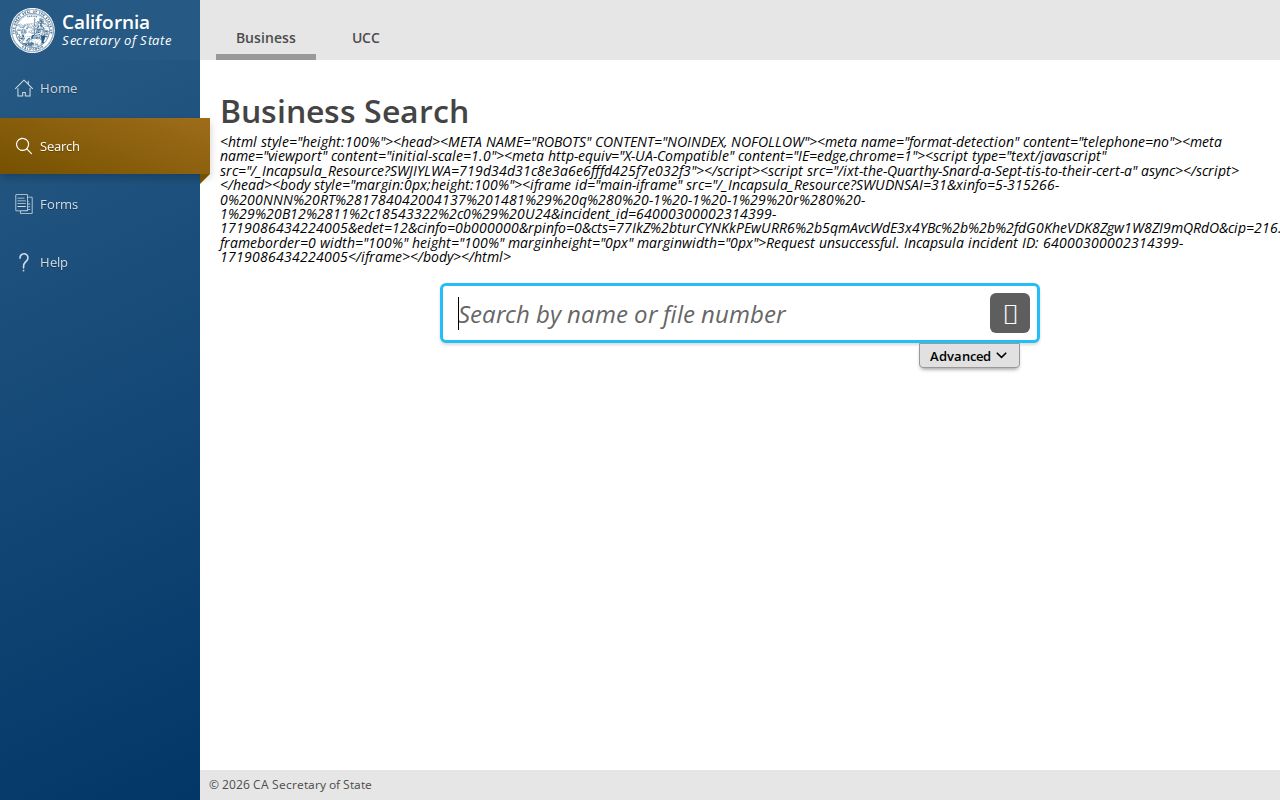
A filing is best treated as a dated business record, then checked against other official sources.
Note: Similar business names are common, so confirm the entity number, filing date, and status before connecting a record to a person.
Huntington Park Unclaimed Property Search
California's ClaimIt system can reconnect a name with dormant funds or property held by the state. Start with a last name or business name, then narrow by first name, middle initial, city, or property ID. A matching result may supply a former city, holder, or property type that points to a new records trail. The State Controller does not charge a fee to claim property, though documentation is required.
The official ClaimIt search provides the name form.
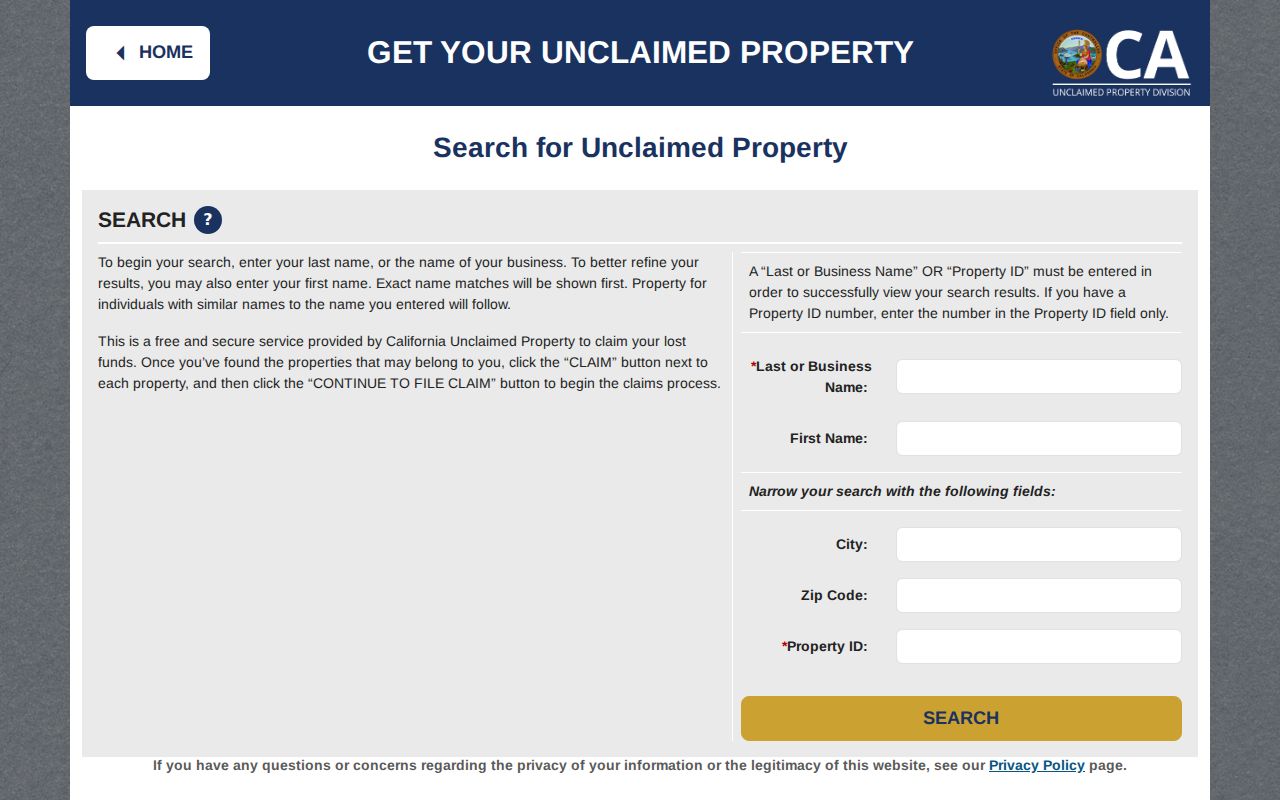
The city filter is useful when a common surname produces statewide matches.
Compare a Huntington Park result with a known past address, court estate file, or business record before drawing a conclusion. Ignore paid solicitations that imply a fee is required for the state claim process.
Older Huntington Park People Directories
Huntington Park's library story begins in 1913, when the branch was housed in City Hall. It moved in 1924 and again in 1931, and the Civic Center building was dedicated in 1970. That history makes library collections a natural bridge between municipal files and family research, but the official branch page does not list exact Huntington Park directory years.
Use the Los Angeles Public Library City Directories Index to search by keyword, city or community, county, state or province, and region. Then ask staff to confirm the volume and format. California State Library directory holdings provide another inquiry route. Do not assume a particular Huntington Park year exists until a catalog or librarian verifies it.
The LAPL index shows the available directory search fields.
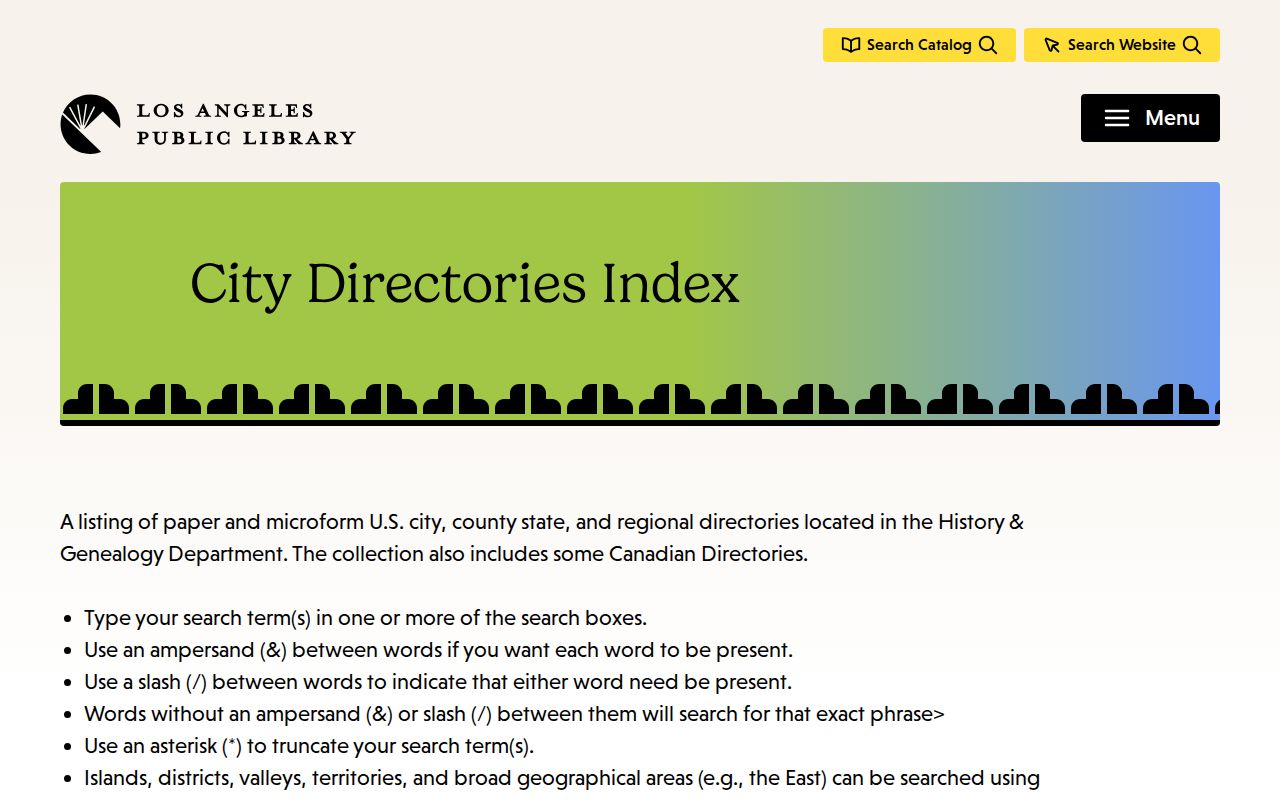
The index can identify a likely volume before a visit or library request.
A second local source is The Greater Southeast Bulletin, published in Huntington Park from 1936 through 1951. Obituaries, school items, legal notices, civic clubs, and business ads can connect a name to an address or date. Since Los Angeles obituaries lack one complete index, a known title and time range matter.
Huntington Park Probate People Trails
Probate, obituaries, death indexes, and deed transfers form a useful official sequence for family and heir research. Begin with the court name index to locate a probate case number. The probate portal then supports case-number access. Docket entries can name the estate representative, filing dates, and the court location, while filed notices may point to relatives or property. Older cases require the court archive or records office.
Next, use a Huntington Park death index or obituary source to check dates and relationships. A certified death record has its own eligibility and order rules, so an index entry should not be confused with the certificate. If real property was involved, carry the decedent, representative, and approximate recording year into the RR/CC name index. That can reveal the deed transfer tied to the estate.
Note: Probate files can expose family details, but sealed documents and other confidential material remain outside public access.
Huntington Park Voter Lookup Limits
Official voter tools are for checking a registration, not browsing a resident list. Los Angeles County's verification form requires last name, birthdate, house number, and ZIP code. California's My Voter Status tool uses private matching details and can show a voter's own status, party preference, election-material language, and polling or ballot information. The deeper voter file is restricted to approved purposes and applications.
The California My Voter Status screen is the state self-lookup.
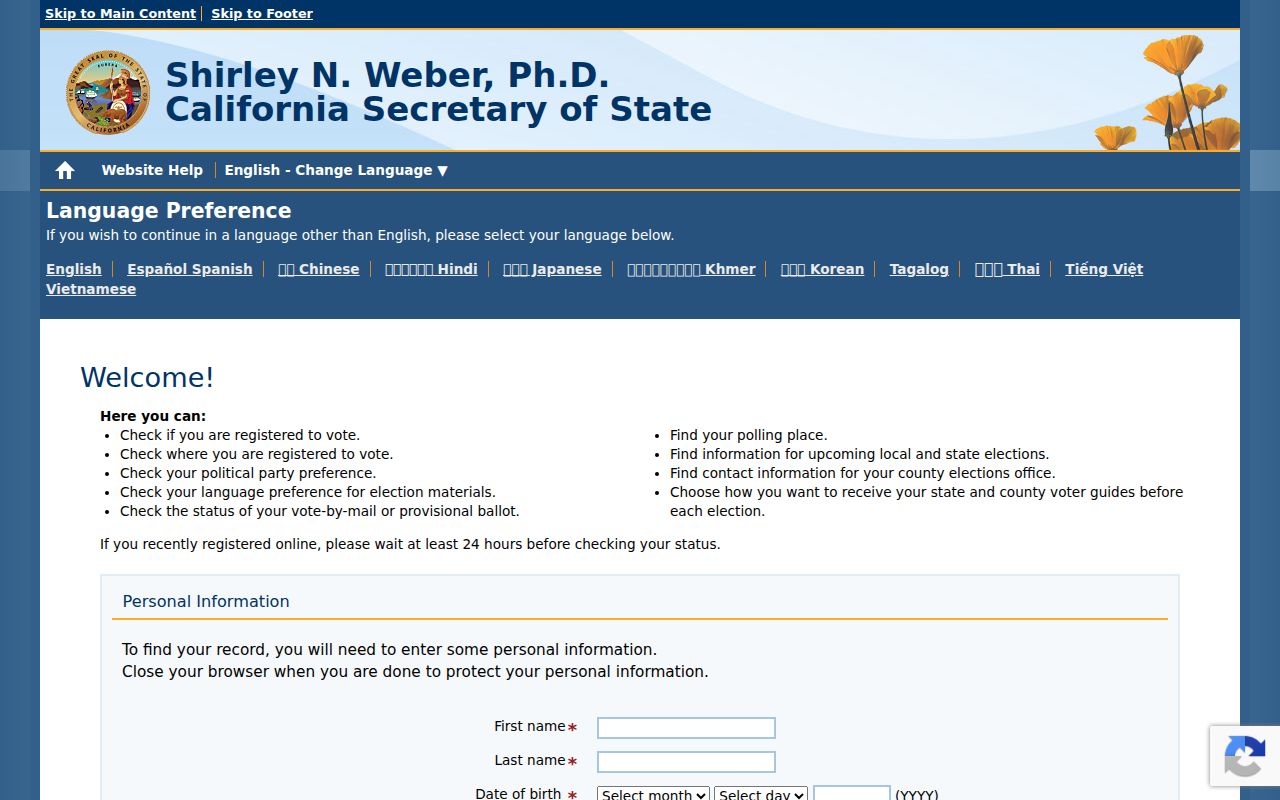
The required personal inputs show why the tool cannot serve as an open reverse directory.
Home address, telephone, email, precinct details, signatures, identification numbers, confidential voter records, and preregistration records receive statutory protection. The dedicated Huntington Park voter registration resource covers the county and state request rules without treating voter data as an ordinary people finder.
Huntington Park Police Records Search
The Huntington Park Police Records Bureau enters citations, crime reports, arrest reports, and traffic accident reports into its records management system. It is not a broad name directory. Access depends on the report type, the requester's status, and California law-enforcement exemptions. Start with the bureau when HPPD created the report; use the City Clerk route for other city records.
The Police Records Bureau describes its local record types.
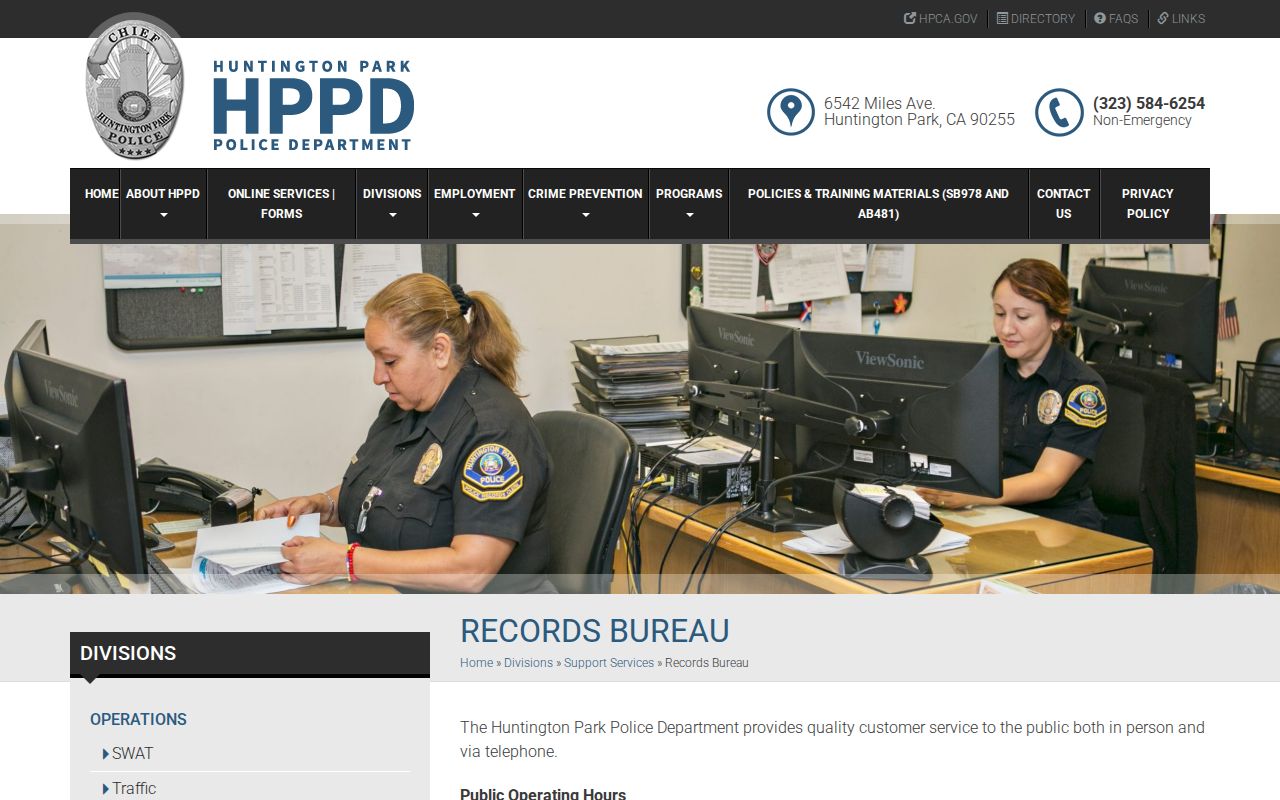
The bureau page helps distinguish a report request from a general city records request.
Current Huntington Park custody searches follow a separate chain. The Los Angeles County Sheriff's Department Inmate Locator handles county custody, with a phone fallback at (213) 473-6100. California's inmate locator covers state prison custody. The state Megan's Law registry displays only legally disclosable records, not every registrant.
Huntington Park Search Source Comparison
Official records and private people-finder databases answer different questions. A government index identifies its custodian, scope, fields, and copy route. A commercial compilation may mix public and private data, but its age, source trail, and correction path can be unclear. Use a private result, if encountered, only as a lead to verify through a named custodian.
| Source type | Strength | Main limit |
|---|---|---|
| Official index | Defined keeper and record scope | May show only index fields |
| Certified copy | Authenticated by the custodian | Fees and eligibility may apply |
| Library source | Historic address and name context | Coverage varies by year |
| Commercial compilation | May combine many leads | Accuracy and source age can be uncertain |
The best Huntington Park search trail keeps the official record number, date, and office attached to every fact.
Huntington Park Privacy Search Controls
California privacy rules do not erase Huntington Park government records that remain public, but they do protect specific fields and create controls for private data brokers. Safe at Home gives eligible participants a substitute mailing address that state and local agencies must accept. Separate statutes protect confidential voter records, recent vital records, juvenile and sealed court matters, adoption files, and some law-enforcement information.
California's Delete Request and Opt-out Platform, called DROP, launched for residents on January 1, 2026. Registered data brokers begin processing DROP requests on August 1, 2026 and must delete within 90 days, followed by recurring processing. This tool targets registered data brokers. It does not remove a deed, court record, or other official file from the public custodian.
Keep the distinction clear: correct an official record with the office that holds it, use statutory confidentiality when eligible, and use California privacy tools for covered private databases.